
Felix’s household electrification
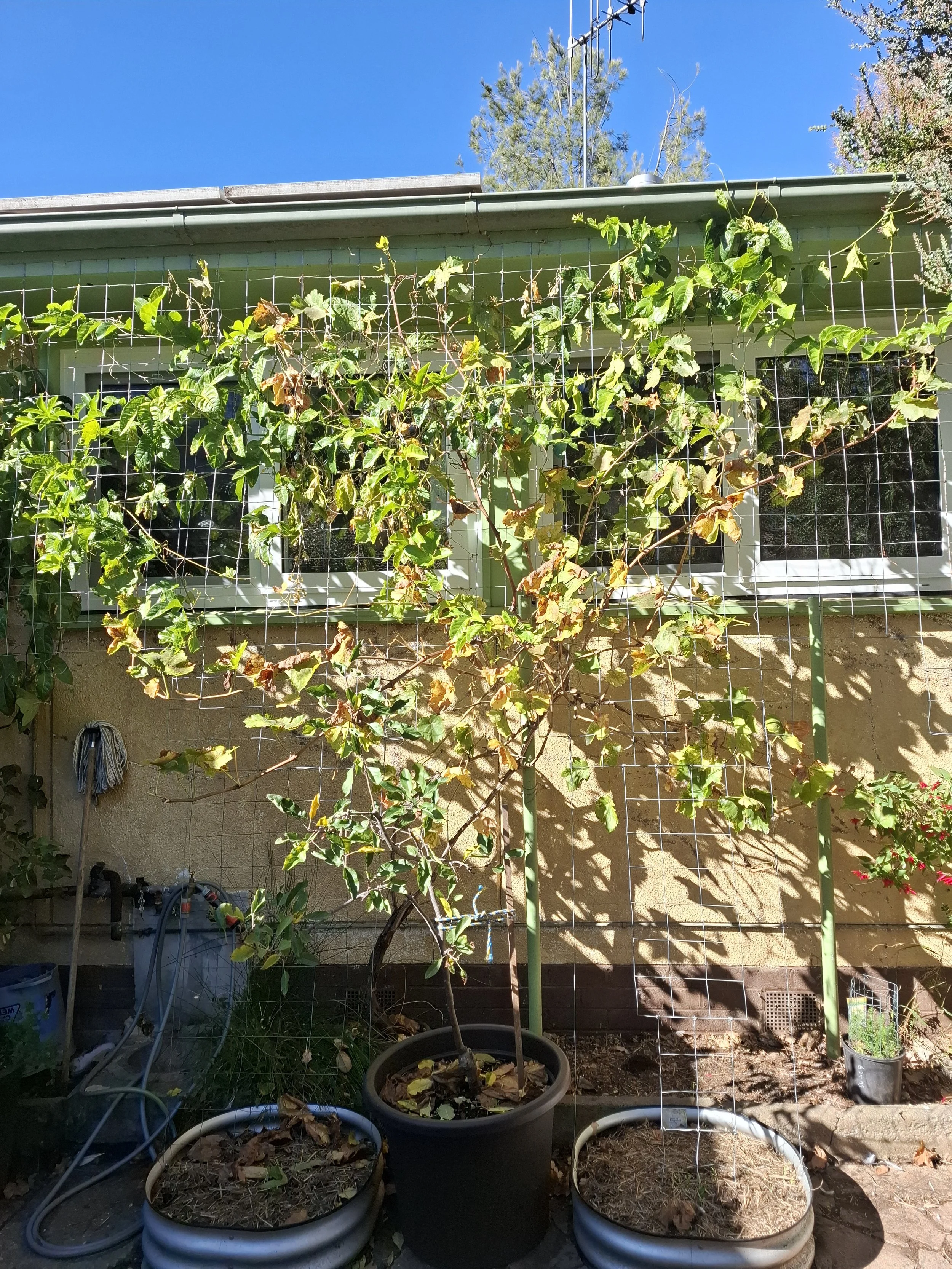
Grape vines and seasonal hops covering the main west-facing windows
4 minute read
Felix describes his household’s electrification as anything but neat or linear.
They bought the house in 1996, when it still had gas hot water and a gas heater in the sitting room. The gas heater went fairly early, after it gave their daughter headaches. They replaced it with a wood heater, which they were very fond of and used for years, even while the rest of the house kept changing.
That is really how their approach has worked: don’t take a backward step. Replace fossil-fuel systems with better electric options when the time is right, and keep improving the house as money and technology allow.
Over the years that meant a gas-boosted solar hot water system in 2002, then an electric booster when the gas unit failed in 2013. It meant a first small solar PV system in 2014, then more solar and a battery later on when batteries became more affordable. It meant buying a second-hand EV and installing a Zappi charger so the car could mostly be charged from rooftop solar. It also meant putting in a reverse-cycle system, which helps in summer and takes the edge off cold winter mornings.
The final step was the wood heater. Felix had already decided they could no longer, in good conscience, keep using it. Since first telling their story, that has now happened: the house is fully electric and the wood heater is no longer in use.
They have not removed it though. Felix says David Holmgren, in a permaculture design course, suggested it still made sense to keep it there as a backup in case things ever "go seriously pear-shaped". So the heater has stayed - but not as a heater. Instead, there is now a little fish tank on top of it, with indoor plants around it, which Felix says is much nicer to look at than an empty firebox. If things ever changed, it could still be brought back into service.
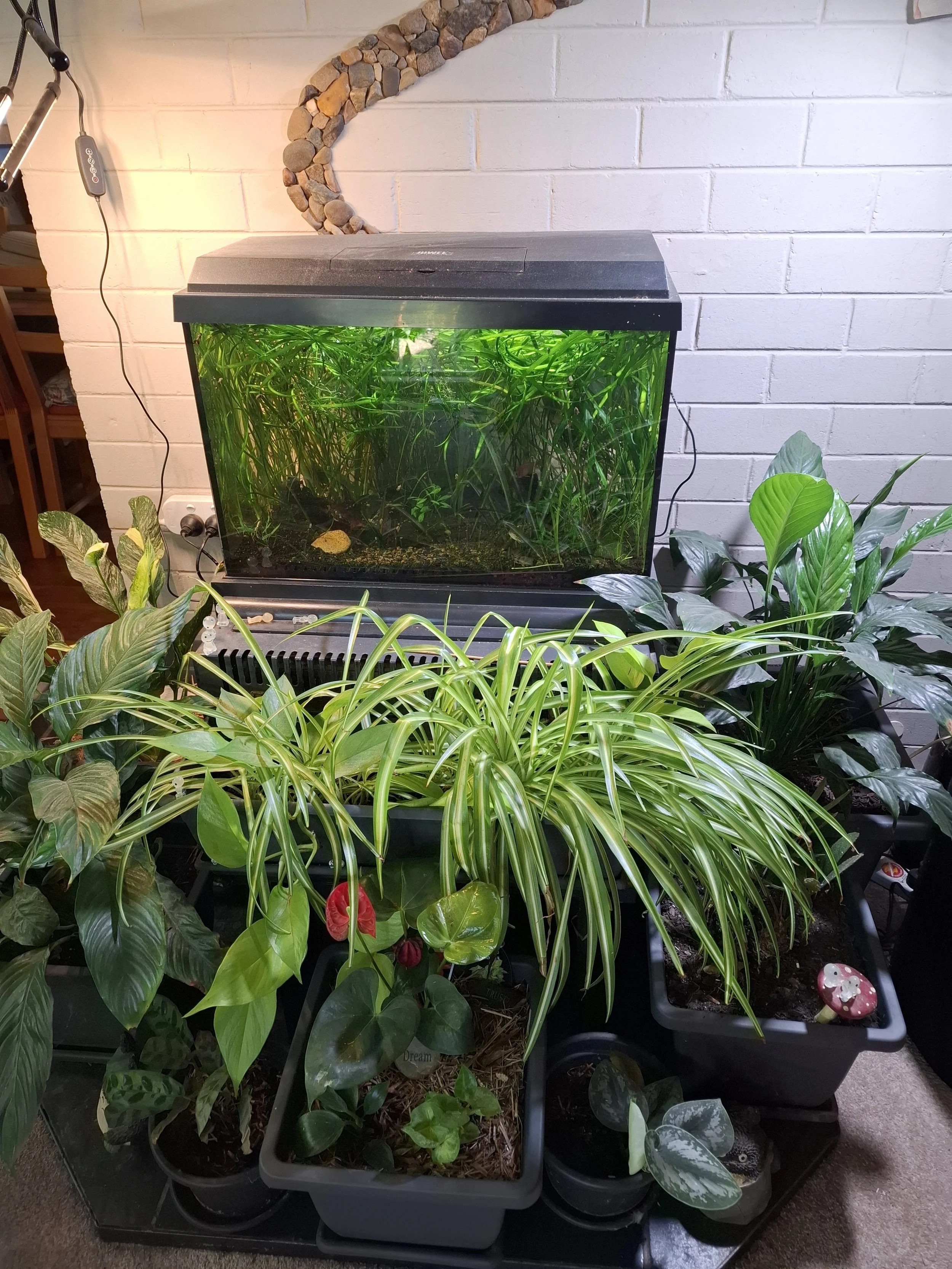
Beautified wood heater
The next likely job is hot water. Their electrically boosted solar hot water service is now about twenty-five years old and no longer especially effective, needing a solid boost most mornings. They are looking at replacing it with a heat pump hot water system from Earthworker Cooperative.
Felix also makes the point that electrification is only half the story. The other half is using less energy in the first place. They have installed Magnetite secondary glazing, replaced several windows with large double-glazed units where secondary glazing was not possible, and use the garden itself as part of the system - with grapevines and hops helping to shade west-facing windows in summer while still allowing sunlight through in winter.
